Hot Box ® Firestarter Blog
How to Light a Wood Burner the Clean Easy Way (No Kindling Needed)

How-To
How to Light a Wood Burner the Clean, Easy Way (No Kindling Needed)
The dependable method for modern stoves: fewer steps, faster heat-up, cleaner glass.
Why this method matters
Lighting a wood burner should be quick, consistent, and smoke-free. Yet many households still spend time stacking kindling, adding paper, and hoping it catches. With Hot Box ® Firestarter, you can skip the kindling altogether. One cube provides enough flame and heat to establish your fire properly, helping your stove draw quickly and your logs ignite efficiently.
Cleaner starts mean less soot on your stove glass, less creosote in your flue, and fewer smoky rooms. For homeowners, that translates to lower maintenance, improved air quality, and longer stove lifespan.
What you’ll need
- 1 × Hot Box ® Firestarter cube
- 2–3 small, dry logs (seasoned or kiln-dried)
- Matches or taper
Step-by-step guide
- Open vents fully to maximise airflow.
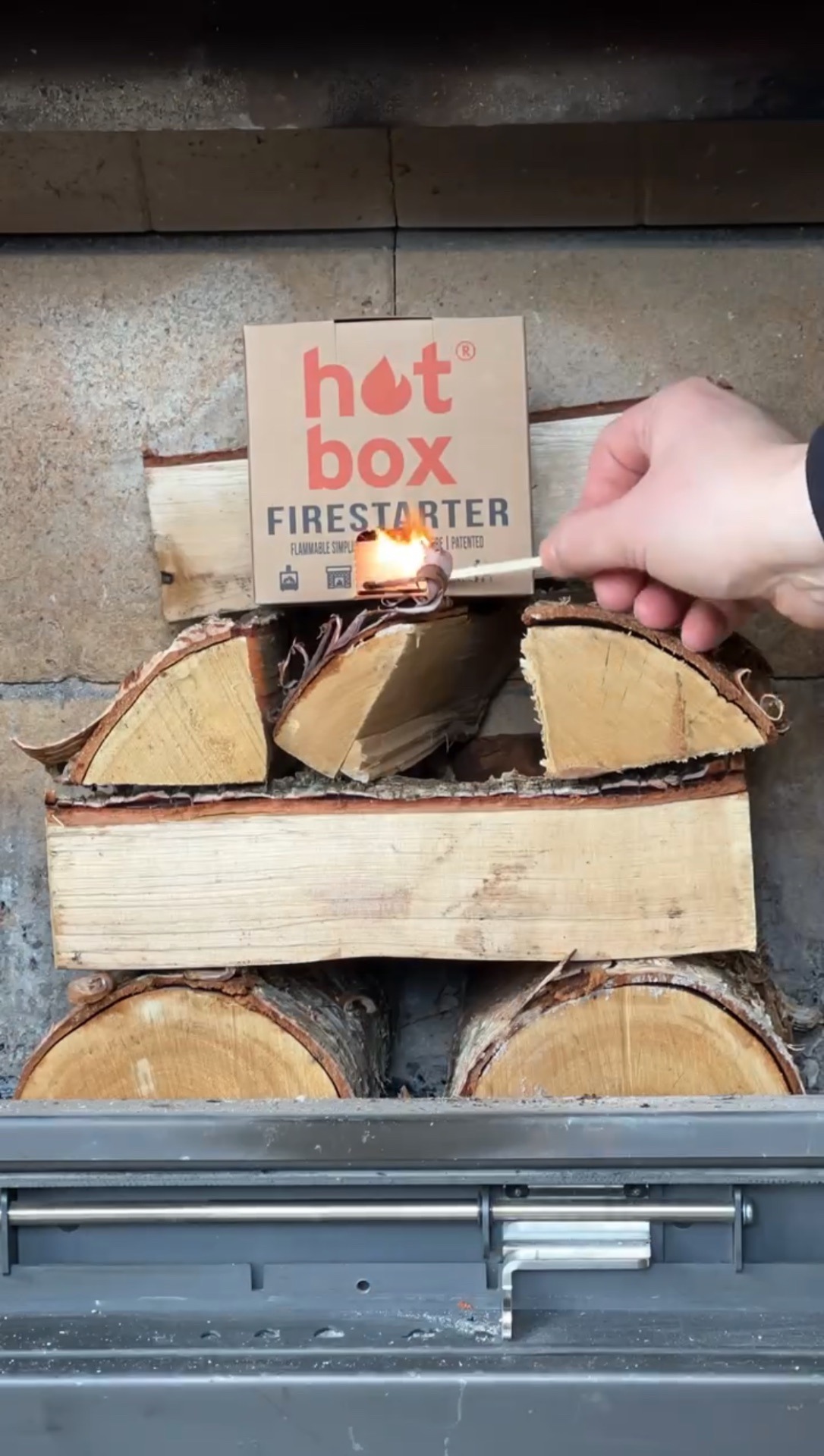
- Place one cube on the grate or firebox base.
- Add 2–3 small logs, leaving finger-width gaps for air circulation.
- Ignite the cube and close the door (if applicable) with vents open.
- After 10–15 minutes, add more logs and adjust vents per your stove’s manual.
Always use logs with ≤20% moisture. A moisture meter is inexpensive and ensures efficient burning.
Watch: How to Light a Wood Burner with Hot Box ® Firestarter
This tutorial shows exactly how a single cube makes lighting your stove quicker, easier, and cleaner.
Why this beats the old ‘teepee’
- Less smoke — a focused flame avoids smouldering kindling piles.
- Faster draft — your flue heats quickly, improving chimney draw.
- Cleaner glass — less soot during startup means clear views of the fire.
- Comparable cost — one cube replaces a stack of kindling and multiple firelighters.
If poor draft persists, consider fitting a chimney cowl to stabilise airflow and improve efficiency.
Common pitfalls to avoid
- Wet wood — slows ignition and creates excess smoke.
- Starved airflow — leave gaps between logs to keep flames healthy.
- Closing vents too early — wait until the fire is fully established.