Burn Better, Heat Smarter

Getting a great fire isn’t just about lighting it — it’s about keeping it burning hotter, cleaner, and longer. This page is your go-to guide for getting the most from every log, reducing wasted fuel, and making your stove or firepit run at its best.

Inside you’ll learn:

  • How to get hotter, more efficient burns with the right wood and airflow.

  • Simple adjustments that cut smoke and boost heat output.

  • Best practices for stove controls so your fire stays steady instead of surging or dying out.

  • Tips to reduce soot and creosote, keeping your stove and flue cleaner for longer.

Whether you’re looking to save money on fuel, warm your home faster, or just enjoy a cleaner, more reliable fire — these steps will help you burn better every single time.

Burning Better How To Reduce Emissions

Table of Contents

Better Burning Advice


The Science of Smoke: Why the First 10 Minutes Matter Most


If you have read recent headlines, you might believe that lighting a wood burner is instantly harmful to the environment. The media often cites alarming statistics about PM2.5 particulates, claiming that stoves are a primary source of modern pollution.

However, these reports frequently miss a critical scientific nuance: the vast majority of emissions occur only during the "Cold Start" phase.

When a chimney is cold, the draught is weak, and wood burns inefficiently (smoldering). This incomplete combustion is what produces smoke. Once the firebox reaches optimal temperature—usually above 600°C—modern EcoDesign stoves burn off harmful particulates before they ever leave the flue, resulting in a burn that is virtually transparent and largely harmless.


The Problem: The "Smolder" Gap


In a traditional fire-lighting scenario, users struggle with newspaper, cold kindling, and damp wood. This leads to a prolonged period—sometimes 20 minutes or more—where the fire smolders rather than burns. It is during this specific window that up to 80% of a fire's total emissions are released.

The media treats this "user error" as an inherent fault of the stove. We know it is actually a fault of the ignition method.


The Solution: Rapid Thermal Lift (The Hot Box Method)


To defend your right to burn, you must eliminate the smolder. The most effective way to do this is by generating High Heat and Instant Draw immediately.

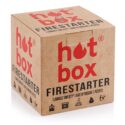
By using the Hot Box Firestarter, you bypass the "kindling struggle." The patented stack creates a concentrated, high-temperature chimney effect inside your stove within seconds. This process, often called Rapid Thermal Lift, forces the cold air out of the flue instantly and establishes a clean draught.

  • Faster Ignition: Reduces the "dirty" lighting phase from 20 minutes to under 5 minutes.

  • Higher Temperatures: Reaches the combustion point where particulates are incinerated rather than released.

  • Consistency: Removes the variable of "poor lighting technique," ensuring every fire is a clean fire.

By fixing the way we light our fires, we don't just reduce smoke; we prove that wood burning—when done with precision—belongs in a sustainable future.


Fact vs. Headline: The Truth About Wood Smoke


If you rely on mainstream news for advice, you might believe that lighting a stove is akin to idling a diesel truck in your living room. Headlines are designed to shock, but they often strip away the context needed to make an informed decision.

The reality is that wood burning is under attack not because the chemistry is flawed, but because human behavior is variable. When we remove "user error" from the equation—using tools like the Hot Box Firestarter—the science tells a very different story.


Myth #1: "A Wood Burner is Worse Than 18 Diesel Cars"


The Headline: A widely circulated claim suggests that a single EcoDesign stove emits more pollution than a fleet of modern diesel vehicles. The Reality: This comparison is a classic case of "apples to oranges."

  • The Flaw: The study compared a stove running at full capacity against a car driving at slow speeds, measuring only the car's exhaust pipe. It completely ignored the particulate matter generated by the car’s brakes and tires (which account for a huge portion of road pollution).

  • The Context: Unlike a car exhaust, which is released at street level (face height), a chimney releases emissions high into the atmosphere where they disperse rapidly. When you use a Hot Box Firestarter to achieve a rapid draw, you ensure those emissions are ejected efficiently and cleanly, rather than lingering at ground level.


Myth #2: "Wood Burning destroys Indoor Air Quality"


The Headline: Reports claim that using a stove fills your home with dangerous PM2.5 particles, damaging your family's health. The Reality: Your Sunday roast might be more "toxic" than your fire.

  • The Science: Studies have shown that cooking a fried breakfast, burning scented candles, or using an air fryer often produces higher spikes in indoor PM2.5 levels than a properly sealed wood stove.

  • The Solution: Modern stoves are "closed systems"—they pull air from the room (or outside) and send waste gases up the flue. Smoke only enters the room if the door is opened at the wrong time or if the flue is cold. By using the Hot Box method, you create an instant thermal draught that sucks air up the chimney immediately, preventing that "back-puff" of smoke into the room during lighting.


Myth #3: "Wood Burning is Not Carbon Neutral"


The Headline: Critics argue that burning wood releases carbon, contributing to climate change just like fossil fuels. The Reality: This ignores the basic Carbon Cycle.

  • The Cycle: When a tree grows, it absorbs CO2. When it dies and rots on the forest floor, it releases that same CO2 back into the air. Burning it releases that carbon instantly rather than slowly, but it does not add "new" carbon to the atmosphere.

  • The Fossil Difference: Burning gas or oil releases carbon that has been locked underground for millions of years—this is a net addition to the atmosphere. Wood is a renewable, current-cycle energy source.


The Verdict: It’s Not the Stove, It’s the Start


The negative statistics almost always come from incomplete combustion—fires that smolder, smoke, and struggle to light. This is the "dirty secret" the industry ignores: a stove is only as clean as its fire.

By guaranteeing a hot, fast, and clean burn from the very first match, you aren't just heating your home; you are proving the critics wrong.