Compare
Firelighter Comparison Guide
Compare Fire-Lighting Methods
Firelighter Comparison: Hot Box® vs Kindling, Wood Wool and Chemical Firelighters
Not every firelighter performs the same job. Traditional cubes, wood wool and natural wax products usually provide the initial flame, but the user must still arrange kindling and larger fuel around them.
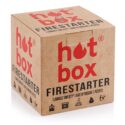
Hot Box® Firestarter was designed as a complete, pre-arranged ignition structure that combines combustible material, airflow and ignition within one compact cube.
This guide compares the main fire-lighting methods used in the UK across preparation, kindling requirements, materials, storage, versatility, cost and ease of use.
Related resources: How to Light a Fire • Patents & Design Rights

A Firelighter Is Not Always a Complete Fire-Starting Method
The term firelighter is used for many different products, but most perform only one part of the process. A conventional firelighter supplies an initial flame. The user must then provide paper, dry kindling, correctly positioned fuel and sufficient airflow for the fire to establish.
This means the fairest comparison is not simply Hot Box® Firestarter against one small cube or one piece of wood wool. It is Hot Box® against the complete arrangement normally required to achieve a successful fire.
Hot Box® Firestarter is supplied as a pre-arranged ignition structure. Its combustible materials are positioned inside a ventilated container before use, reducing the need for the customer to construct a separate bed of kindling.
Most firelighters ignite the kindling.
Hot Box® Firestarter is designed to replace the separate kindling structure.
The Main Fire-Lighting Options Compared
The UK market contains several broad types of firelighter. Each can be suitable in the right circumstances, but they differ significantly in the amount of preparation and supporting material required.
Hot Box® Firestarter
A patented, pre-arranged ignition cube designed to combine combustible structure, airflow and ignition without a separate kindling bed.
Loose Kindling and Paper
Dry timber pieces arranged by the user, usually with newspaper, a match or another ignition source beneath them.
Wood Wool Firelighters
Twisted wood fibres commonly coated with wax. They provide an initial flame but are normally used beneath separate kindling.
Wax-Based Firelighters
Natural or partly natural combustible blocks designed to burn for several minutes beneath kindling, charcoal or logs.
Paraffin or Chemical Firelighters
Compact cubes that ignite easily and provide a concentrated flame, usually beneath paper and loose kindling.
Hexamine Firelighters
Chemical solid-fuel tablets commonly used for camping stoves and outdoor ignition rather than natural household fire lighting.
Complete Firelighter Comparison Table
The table compares the normal role of each method. Performance can vary between individual brands, fuel conditions, appliances and user technique.
| Comparison Point | Hot Box® Firestarter | Loose Kindling | Wood Wool | Natural Wax Firelighter | Chemical / Paraffin Cube | Hexamine Tablet |
|---|---|---|---|---|---|---|
| Provides initial ignition | Yes | Needs a separate ignition source | Yes | Yes | Yes | Yes |
| Includes a pre-arranged fuel structure | Yes | User arranged | No | No | No | No |
| Separate kindling normally required | No separate bed intended | Method is kindling-based | Usually | Usually | Usually | Usually for larger fires |
| Airflow engineered into product | Yes | Depends on arrangement | No structured airflow system | No structured airflow system | No structured airflow system | No structured airflow system |
| Patented construction | Yes | No | Depends on brand | Depends on brand | Depends on brand | Depends on product |
| Preparation before lighting | Low | High | Moderate | Moderate | Moderate | Moderate |
| Consistent portion per fire | One cube | Variable | One or more pieces | One or more blocks | One or more cubes | One or more tablets |
| Natural-material positioning | Yes | Yes | Usually | Often | No | No |
| Suitable for wood burners | Yes | Yes | Yes | Yes | Often | Check product guidance |
| Suitable for BBQs and outdoor fires | Yes | Yes | Often | Often | Depends on product | Common outdoor use |
| Overall convenience | Very high | Low | Moderate | Moderate | Moderate | Moderate |
This comparison describes typical product formats and normal methods of use. Individual firelighter brands may differ. Always follow the product instructions and the appliance manufacturer’s guidance.
Hot Box® vs Loose Kindling and Newspaper
The Traditional Method
Loose kindling can work extremely well when it is dry, correctly sized and arranged with sufficient airflow. It can also be economical where clean timber offcuts are readily available.
However, the method requires storage space, preparation and judgement. Damp pieces, tightly packed material or insufficient airflow can make the initial fire difficult to establish.
Advantages
- Can be inexpensive or free
- Natural timber material
- Works across many appliances
Considerations
- Requires preparation and storage
- Moisture and sizing can vary
- Usually needs paper or a firelighter
Why Hot Box® Is Different
Hot Box® Firestarter arrives pre-assembled. The internal combustible materials and airflow gaps are already positioned within the cube.
The user does not need to collect, split, dry and arrange a separate kindling structure before every fire.
For customers who value speed, consistency and predictable storage, this can provide a more convenient route to an established flame.
Hot Box® vs Wood Wool Firelighters
Wood Wool Strengths
Wood wool firelighters are a credible natural alternative to paraffin cubes. They are generally easy to handle, compact and capable of producing a useful initial flame.
Many customers also prefer their low-odour, natural-material positioning, particularly for wood burners and outdoor cooking.
Advantages
- Often made from wood fibres and wax
- Easy to light and store
- Widely available
Considerations
- Usually ignites separate kindling
- May require more than one piece
- No integrated fuel structure
The Hot Box® Difference
Wood wool usually performs the role of a conventional firelighter. It supplies flame beneath a structure that the user builds from kindling and logs.
Hot Box® is designed to combine both roles. Its internal combustible arrangement functions as the initial fuel structure as well as the ignition method.
The distinction is simple: wood wool commonly lights the kindling, while Hot Box® is intended to replace the separate kindling bed.
Hot Box® vs Natural Wax Firelighters
Natural Wax Firelighters
Natural wax firelighters can provide a clean and convenient source of ignition. Formats vary from compressed fibre blocks to wax-coated wood products.
Their burn duration may be longer than basic chemical cubes, but they are still normally positioned beneath kindling, charcoal or another secondary fuel structure.
Advantages
- Often low odour
- Natural-material options available
- Convenient compact format
Considerations
- Normally requires kindling
- Performance varies by brand
- Still forms only one part of the method
The Hot Box® Difference
Hot Box® is not merely a larger wax firelighter. Its value comes from the complete arrangement inside the cube.
The combustible materials, ignition element and airflow openings work together as one pre-assembled fire-starting apparatus.
This reduces the number of separate products and preparation stages required before the main fuel can be added.
Hot Box® vs Chemical and Paraffin Firelighter Cubes
Traditional Chemical Cubes
Paraffin and other chemical firelighter cubes are inexpensive, easy to ignite and widely available. They can be effective where the user already has suitable dry kindling ready to arrange around them.
Their limitations are usually not the initial flame, but the fact that they remain dependent on separate supporting material.
Advantages
- Low individual unit price
- Easy to ignite
- Compact and widely stocked
Considerations
- Usually requires paper and kindling
- Can have a noticeable odour
- May need multiple cubes
The Hot Box® Difference
Hot Box® Firestarter is positioned as a natural, all-in-one alternative rather than a direct substitute for one small chemical cube.
It is designed to replace the combined use of firelighter, paper and kindling with one pre-arranged product.
Customers comparing price should therefore compare the complete cost and preparation involved in each successful fire, not simply the shelf price of one cube.
Hot Box® vs Hexamine Firelighters
Where Hexamine Fits
Hexamine tablets are compact chemical solid fuels commonly associated with camping stoves, emergency kits and outdoor equipment.
They can produce a concentrated flame, but they are not positioned as natural firelighters and may not be suitable for every appliance or cooking application.
Advantages
- Compact and portable
- Useful for specific outdoor equipment
- Long storage potential
Considerations
- Chemical solid-fuel product
- Not a natural ignition method
- Separate fuel structure usually required
The Hot Box® Difference
Hot Box® is designed around natural combustible materials and a pre-arranged structure intended for fires in compatible household and outdoor appliances.
It is a different product category from a camping fuel tablet. The objective is to establish a full fire rather than provide a small standalone heat source.
Always check the individual product and appliance instructions before using any chemical or solid-fuel tablet.
Which Firelighter Is Best for You?
The best option depends on what the user values most. Hot Box® does not need to be the cheapest individual item to provide the strongest overall combination of preparation, structure and convenience.
Basic Cubes or Bulk Wood Wool
Customers focused only on the lowest individual firelighter price may prefer conventional cubes or bulk packs of wood wool.
Dry Loose Kindling
Where clean, dry timber offcuts are already available, traditional kindling can remain an economical method.
Hot Box® Firestarter
Best suited to users who want to reduce preparation and avoid constructing a separate bed of kindling for every fire.
Wood Wool
A good choice where the user already has dry kindling and only needs a natural source of initial flame.
Hot Box® Firestarter
Each cube provides a pre-arranged ignition structure, reducing variability in how the initial fire is built.
Hot Box® Firestarter
Protected by granted patents across the UK, Europe, the United States, Canada and Japan.
Indicative Convenience Comparison
These scores are editorial indicators based on the typical preparation and components required by each method. They are not laboratory performance ratings.
Why Hot Box® Goes Beyond a Conventional Firelighter
Pre-Arranged Structure
The combustible materials are positioned before use rather than being assembled by the customer.
Integrated Airflow
Internal gaps and external openings are designed to allow air to move through the cube during ignition.
No Separate Kindling Bed
The product is intended to remove the usual arrangement of loose kindling beneath the main fuel.
International Patent Portfolio
The technology is supported by granted patents across Europe, North America and Asia.
Explore Hot Box® Firestarter
Compare the cost per fire, learn how to use the patented product or purchase Hot Box® Firestarter directly.
Compare the Cost Per Fire
Use editable figures to compare Hot Box® against conventional cubes, paper and loose kindling.
Open the cost calculator →See How It Works
Follow the recommended process for preparation, positioning, ignition and adding suitable fuel.
Read the fire-lighting guide →Explore the Patented Technology
Learn about the patents, registered designs and trade marks protecting Hot Box® Firestarter.
View patents and design rights →Frequently Asked Questions
Is Hot Box® Firestarter better than wood wool firelighters?
Wood wool can be an effective natural firelighter where the user already has suitable dry kindling. Hot Box® differs because it is designed as a complete ignition structure that removes the need to build a separate kindling bed.
Does Hot Box® Firestarter replace kindling?
Hot Box® Firestarter is designed to replace the conventional arrangement of loose kindling in compatible applications. Suitable main fuel is added once the Firestarter has established a strong flame.
Are chemical firelighters cheaper than Hot Box®?
A chemical cube may have a lower individual unit price, but it is commonly used with paper, kindling and sometimes more than one cube. A fair comparison should include every ignition material used for one successful fire.
Is Hot Box® Firestarter natural?
Hot Box® Firestarter is positioned as a natural fire-lighting product using combustible materials arranged inside a ventilated cube, without relying on the conventional chemical-cube format.
Can Hot Box® Firestarter be used for BBQs?
Hot Box® Firestarter can be used with compatible BBQs, pizza ovens, fire pits and other suitable outdoor appliances. Always follow the product and appliance instructions.
What is the main advantage of Hot Box® Firestarter?
Its main advantage is that it combines ignition, combustible structure and airflow in one pre-arranged product, reducing the need for separate paper, firelighters and loose kindling.
Is Hot Box® Firestarter patented?
Yes. Hot Box® Firestarter is supported by granted patents in the United Kingdom, Europe, the United States, Canada and Japan.
More Than a Firelighter
Conventional firelighters provide the spark or flame. Hot Box® Firestarter is designed to provide the complete starting structure.
One compact cube. No separate kindling bed. Less preparation before the main fuel is added.
Patented fire ignition technology, designed for simpler fire lighting.