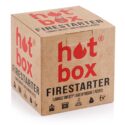
Best Firelighters UK | Hot Box ® Firestarter 2026 Guide
Hot Box® Firestarter Buyer’s Guide
Best Firelighters UK: Which Firelighter Is Best for Your Fire?
A good firelighter needs to do more than catch fire. It needs to burn strongly and for long enough to transfer heat into the fuel above it — without repeated relighting, excessive preparation or a complicated stack of newspaper and kindling.
Hot Box® Firestarter takes a different approach. Each unit combines the ignition source, kindling material and an open airflow structure in one compact firestarter, creating a sustained flame designed to establish logs or charcoal directly.
Designed for wood-burning stoves, open fires, BBQs, pizza ovens and fire pits, a Hot Box® Firestarter typically burns for around 12–15 minutes, giving the main fuel time to catch and the fire time to establish.
Which firelighter is best?
For occasional use, inexpensive paraffin or wax firelighters can work perfectly well when combined with correctly arranged dry kindling. Wood-wool firelighters are also popular for people wanting a simple traditional option.
For users who want to remove the separate kindling stage altogether, Hot Box® Firestarter offers a different solution: the firelighter and kindling structure are combined into one ready-to-light unit.

Firelighter + Kindling. One Simple Firestarter.
Traditional fire lighting normally requires a firelighter, separate kindling and a carefully built fire lay. Hot Box® has been designed to combine those functions into one compact structure.
What Makes a Good Firelighter?
The best firelighter is not necessarily the one that produces the largest initial flame. What matters is whether it provides enough sustained heat to ignite the fuel above it and establish a stable fire.
For a wood-burning stove, that means warming the fuel and helping establish the flue draught. For a BBQ, it means transferring enough heat into charcoal or briquettes. Outdoors, it may also need to continue burning despite airflow around the fire.
A useful comparison should therefore consider ignition reliability, burn duration, ease of use, handling, versatility and whether separate kindling is required.
Firelighter Types Compared
There are several common ways to start a fire. Each has strengths and limitations, and the right choice depends on whether price, convenience, traditional fire laying or simplicity matters most to you.
| Type | Main Advantage | Main Limitation | Separate Kindling? | Typical Uses |
|---|---|---|---|---|
| Wood wool firelighters | Simple and familiar format | Usually still requires a traditional fire lay | Usually | Stoves, fireplaces, BBQs |
| Paraffin cubes | Low cost and widely available | Shorter ignition phase and characteristic odour | Usually | General fire lighting |
| Wax-based firelighters | Easy to handle and store | Separate kindling commonly required | Usually | Indoor and outdoor fires |
| Hot Box® Firestarter | Firelighter and kindling structure combined | Higher unit cost than a basic firelighter cube | No separate kindling required | Stoves, fires, BBQs, pizza ovens and fire pits |
Why Hot Box® Is Different
Hot Box® was developed around a simple problem with conventional fire lighting: the firelighter is normally only one part of the process.
A conventional fire lay usually requires an ignition source at the bottom, smaller pieces of dry kindling above it and sufficient airflow through the arrangement. Only once that smaller fuel is established can larger logs be expected to ignite reliably.
Hot Box® combines these functions into a single ready-made structure.
Our Pick: Hot Box® Firestarter
If your priority is the lowest possible cost per ignition, basic firelighter cubes remain difficult to beat. If your priority is reducing the number of components and steps required to light the fire, Hot Box® offers a considerably different proposition.
Instead of competing simply as another small cube, Hot Box® is designed to replace the combination of firelighter + separate kindling + fire-building preparation.
A typical unit burns for approximately 12–15 minutes. This extended ignition period provides time for larger fuel to absorb heat, begin releasing combustible gases and establish properly.
That is particularly useful for wood-burning stoves and larger logs, where a short-lived ignition source can extinguish before the fire becomes self-sustaining.
The same principle also makes Hot Box® suitable for charcoal BBQs, fire pits, pizza ovens, chimineas and outdoor fires.
Want to Try the All-in-One Approach?
Position Hot Box® beneath your fuel, light it and allow the firestarter to establish the fire. No separate bundle of kindling is required.
Shop Hot Box® Firestarter
Best Firelighters for Log Burners, BBQs and Outdoor Fires
Log Burners & Wood-Burning Stoves
A stove needs enough initial heat to establish both the fuel and the flue draught. Conventional fire lighting normally involves placing kindling above one or more firelighters.
A longer-burning structured firestarter can simplify this process by producing sustained heat beneath the logs while maintaining airflow through the ignition zone.
You can also read our step-by-step guide to lighting a fire.
Open Fires & Fireplaces
Open fires can be affected by chimney draw and the size or moisture content of the first logs. An ignition source that continues burning while the fire establishes can make the process considerably more forgiving.
BBQs & Charcoal
For charcoal cooking, the objective is to establish a sufficiently large area of glowing fuel before cooking begins. A sustained ignition source beneath lumpwood charcoal or briquettes can reduce repeated relighting and preparation.
Pizza Ovens
Wood-fired pizza ovens depend on a rapidly developing fire to begin heating the oven chamber and cooking surface. A reliable ignition stage helps establish the initial wood fire before progressively larger pieces are added.
Fire Pits & Outdoor Fires
Outdoor fires are more exposed to changing airflow and larger pieces of fuel. A longer ignition period gives the main fuel more opportunity to catch before the original flame disappears.
Camping & Outdoor Cooking
Reducing the number of separate fire-lighting components can be particularly useful away from home. A compact all-in-one firestarter is easier to pack than carrying both firelighters and a separate supply of prepared kindling.

Firelighters With or Without Kindling?
This is one of the most important differences between fire-starting systems.
Traditional firelighters are designed primarily to provide the first flame. The user then creates a second layer of smaller combustible material — usually dry sticks or split timber — which transfers the flame to the logs above.
That system works well when it is prepared correctly, but it requires several components and a little technique.
Hot Box® was designed around the alternative idea that the intermediate kindling stage could form part of the firestarter itself.
For people who light fires frequently, that can mean less preparation, fewer components to store and a more repeatable ignition process.
Natural and Chemical Firelighters
Firelighters are manufactured from a wide range of materials, including paraffin-based compounds, wax, wood wool and other combustible fibres.
Different users place different importance on price, odour, handling and material composition. Paraffin cubes remain popular because they are inexpensive and widely available, while wood-wool and wax-based alternatives appeal to users looking for a different handling or fire-lighting experience.
Rather than focusing only on whether a firelighter is described as “natural”, it is useful to consider the complete ignition process: how easily it lights, how long it burns, how much additional kindling is required and whether it reliably establishes the main fuel.
How to Choose the Right Firelighter
Ignition Reliability
The firelighter needs to ignite easily and continue burning once it has been lit.
Burn Duration
A longer ignition period provides more time for logs or charcoal to absorb enough heat to establish.
Kindling Requirement
Consider whether you are happy preparing separate kindling or would prefer a product that incorporates this stage.
Ease of Use
A repeatable fire-lighting process is particularly valuable for households using a stove or fireplace regularly.
Versatility
A multi-use firestarter can be kept for stoves, BBQs, pizza ovens and outdoor fires rather than buying different products.
Overall Value
Compare not just the unit price but also any separate kindling, preparation and repeated attempts required to establish the fire.
Hot Box® Firestarter: Designed Rather Than Improvised
Most traditional firelighters are variations of a familiar concept: a small combustible product designed to provide an initial flame.
Hot Box® was developed from a different starting point — looking at the whole ignition process rather than just the first flame.
Its protected design concept brings the ignition material and kindling structure together within one compact unit. The objective is not simply to burn, but to create the conditions required for the larger fuel above it to ignite reliably.
That distinction is central to the Hot Box® concept and why we describe it as an all-in-one firestarter.
Frequently Asked Questions
What are the best firelighters for a log burner?
For a log burner, choose a firelighter that burns long enough to establish the initial fuel and help generate chimney draught. Conventional firelighters work well with correctly arranged dry kindling, while an all-in-one product such as Hot Box® can remove the need for separate kindling.
How long should a firelighter burn?
There is no single ideal burn time because different fuels require different amounts of heat. However, a longer sustained ignition phase generally gives larger logs or charcoal more opportunity to establish. Hot Box® Firestarter typically burns for approximately 12–15 minutes.
Can you light logs without kindling?
Large logs normally benefit from an intermediate source of smaller combustible material. Hot Box® incorporates this kindling function within the firestarter itself, allowing logs to be positioned directly above the unit without preparing a separate traditional kindling stack.
Can the same firelighter be used for BBQs and wood burners?
Yes. Multi-use firestarters can be used across wood-burning stoves, fireplaces, BBQs, pizza ovens and outdoor fires, provided they are used in accordance with the product instructions and the appliance manufacturer’s guidance.
Are expensive firelighters worth buying?
That depends on what you value. Low-cost cubes are economical when used with separate kindling. A premium all-in-one product may offer better overall value to users who place greater importance on convenience, consistency and reducing the number of fire-lighting components required.
What is the difference between a firelighter and a firestarter?
The terms are often used interchangeably. In the UK, “firelighter” is more common, while “fire starter” is widely used internationally. Hot Box® uses the term Firestarter because the product is designed as a complete ignition system rather than simply a conventional firelighter cube.