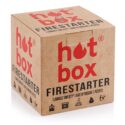
Hot Box ® Firestarter Blog
7 Powerful Clean-Burning Stove Ignition Best Practices


7 Powerful Clean-Burning Stove Ignition Best Practices
Clean-burning stove ignition best practices are the foundation of low-emission, efficient wood-burning. Research from HETAS, the Environmental Protection Agency, and the European Stove Institute confirms that the ignition phase — not the steady-state burn — is where the majority of avoidable woodsmoke, PM2.5, and unburned hydrocarbons are released. This means the way you light your stove has a greater environmental impact than the stove model itself.
While modern Ecodesign stoves are capable of impressively clean combustion, they only achieve those low emission levels after they reach proper temperature and airflow. If the ignition is weak, smoky, or prolonged, real-world pollution can double or even triple. That’s why increasing attention is being placed on clean-burning stove ignition best practices across Europe, especially in regions with strict air quality standards.
In this in-depth guide, we break down the seven most important clean-burning ignition practices verified by current research. You’ll learn what they are, why they matter, and most importantly — how Hot Box® Firestarter makes these best practices effortless for every household.
Light Clean, Burn Clean
Clean-burning stove ignition best practices are easy to follow when your fire starts strong. Hot Box® gives you powerful, consistent ignition every time.
Shop Hot Box® FirestarterWhy Clean-Burning Ignition Matters
Before looking at the best practices themselves, it’s important to understand why ignition is so crucial. Clean-burning stove ignition best practices exist because the ignition phase is the most unstable part of the burn cycle. At this moment:
- The stove and flue are cold.
- Fuel vapours are released faster than they can combust.
- Airflow is inconsistent and insufficient.
- Incomplete combustion is highly likely.
This results in:
- High smoke output
- Heavy PM2.5 emissions
- Large visible plumes from chimneys
- Increased creosote formation
- Lower heating efficiency
But with clean-burning stove ignition best practices, the stove warms faster, draft strengthens sooner, fuel lights more predictably, and air quality improves both indoors and outdoors.
Best Practice 1: Use the Top-Down Method
Nearly every authoritative combustion study agrees that the top-down method is the cleanest, most efficient way to ignite a stove. In this method, you arrange fuel from largest to smallest:
- Large logs at the bottom
- Medium splits above
- Kindling above that
- Firestarter placed on top
When the fire burns downward, smoke from lower layers passes through the hot flame zone, where it reignites instead of escaping out the chimney. This significantly reduces PM emissions.
Hot Box® Firestarter is engineered specifically for top-down ignition. The patented combustion chamber creates a strong flame column that ignites the upper layers immediately and drives heat downward in a structured, efficient way.

Best Practice 2: Ensure Maximum Airflow During Ignition
One of the most important clean-burning stove ignition best practices is to provide as much oxygen as possible during the first 5–10 minutes. This is when the fire is weakest but requires the highest oxygen supply.
Research from HETAS shows that low-air ignition is responsible for some of the worst chimney smoke and largest PM spikes. Users often make the mistake of closing vents too early, suffocating the flame and causing incomplete combustion.
Hot Box® supports full-air ignition by burning hotter and stronger than standard firelighters. This high-flame behaviour accelerates draft and stabilises airflow, making clean burning easier and more reliable.
Best Practice 3: Only Use Kiln-Dried or Ready-to-Burn Logs
No ignition method can overcome wet wood. Moisture above 20% causes:
- Steam release
- Temperature drops
- Sparks & sputtering
- Heavy grey smoke
- Poor heat output
A cornerstone of clean-burning stove ignition best practices is using dry, uniform hardwood logs labelled Ready-to-Burn. These ignite faster, burn cleaner, and support efficient secondary combustion.
Hot Box®’s high-temperature ignition helps even borderline damp logs burn more cleanly, though proper fuel storage remains essential.
Best Practice 4: Avoid Newspaper, Cardboard & Resin Starters
Newspaper and scrap cardboard produce heavy soot and unburnt hydrocarbons. Resin-soaked firelighters release higher VOCs and unpredictable combustion behaviour. All studies agree: these should be avoided if you care about clean-burn performance.
Hot Box® burns:
- Soot-free
- Wax-free
- Resin-free
- With stable, predictable flame shape
This aligns directly with clean-burning stove ignition best practices.
Best Practice 5: Minimise Door Openings
Opening the stove door during ignition is one of the leading causes of indoor pollution spikes, releasing PM2.5 into the living area. Clean-burning stove ignition best practices recommend:
- Lighting once
- Closing the door
- Leaving the fire undisturbed
Hot Box® makes this easier by providing strong one-step ignition that rarely requires intervention.
Best Practice 6: Pre-Heat the Flue for Faster Draft
One of the lesser-known clean-burning stove ignition best practices involves establishing a stronger draft early. A cold flue is a major cause of ignition smoke because exhaust gases stall in the chimney before a stable upward airflow is created.
A weak draft results in:
- Delayed ignition of the main fuel load
- Smoke leakage when the door is opened
- Longer smoke visibility from the chimney
- Reduced oxygen reaching the fire
Hot Box® Firestarter helps accelerate draft formation naturally by producing hotter rising gases during the initial burn. The patented internal flame chamber channels heat upward with greater velocity, warming the flue and establishing a cleaner, stronger draw sooner. This increases combustion efficiency and dramatically reduces chimney smoke during the first few minutes.
Best Practice 7: Standardise Your Ignition Routine
The seventh and final practice is often overlooked but is essential for consistent clean burning: standardisation. In other words, repeat the same clean-burning ignition routine every time you light your stove. Research shows that user inconsistency is one of the biggest reasons emissions vary wildly between households.
For example:
- One day you may use dry wood; the next day it’s slightly damp.
- One day you may stack neatly; the next day you’re in a hurry.
- One day you may fully open the vents; the next day you forget.
Hot Box® solves this problem by giving users a “fixed ignition system.” With one Firestarter and a top-down stack, the ignition is repeatable, predictable, and research-aligned. This means:
- Fewer smoky starts
- Lower emissions overall
- Better fuel economy
- Greater heat output
- Cleaner chimneys
Standardisation is at the core of clean-burning stove ignition best practices, and Hot Box® is the easiest way to achieve it.
The Research Behind Clean-Burning Ignition
Several international studies support the idea that good ignition is essential for lower emissions:
- HETAS technical bulletins emphasise airflow, fuel quality, and top-down technique.
- The EPA (USA) identifies cold-start ignition as the worst contributor to PM2.5 output.
- The Norwegian Stove Institute cites top-down ignition as 30–50% cleaner than traditional methods.
- DEFRA research confirms that poor ignition can triple particulate emissions compared to best practice.
The global consensus is clear: clean-burning stove ignition best practices aren’t optional — they’re essential for responsible wood-burning.
How Hot Box® Aligns with Research-Backed Ignition
The patented Hot Box® Firestarter was engineered from the ground up to support these research-proven clean-burning stove ignition best practices. Every element serves a purpose:
1. Vertical Flame Column
The internal airflow system produces a tall, oxygen-rich flame that rapidly heats both the kindling and the flue.
2. High Thermal Output
Hot Box® generates more heat in the first 90 seconds than multiple wax cubes combined, reducing the dirty ignition window.
3. Stable Combustion Behaviour
Unlike wax cubes, which burn unpredictably, Hot Box® produces a steady, consistent flame profile.
4. Zero Resin or Waxy Deposits
No paraffin, no resin, and no synthetic accelerants — making combustion cleaner and more predictable.
5. Designed for Top-Down Lighting
The flame geometry is optimised for downward ignition, which is central to clean-burn research.
6. Repeatable Performance
Every Firestarter behaves the same — eliminating day-to-day variability caused by user technique.
The Environmental Impact of Better Ignition
Clean-burning stove ignition best practices have far-reaching environmental benefits beyond simply reducing chimney smoke. Good ignition supports:
- Lower PM2.5 emissions
- Reduced PAH (polycyclic aromatic hydrocarbon) release
- Lower carbon monoxide formation
- Cleaner urban air quality
- Reduced strain on local Air Quality Management Areas (AQMAs)
Hot Box® helps stoves reach efficient combustion sooner, meaning fewer harmful byproducts are produced and more heat is extracted from the same amount of wood.
How Clean Ignition Benefits Your Chimney
Creosote buildup is a direct consequence of incomplete combustion, especially during cold-start ignition. The longer a stove smoulders, the more tar-like deposits accumulate on the flue walls.
With clean-burning stove ignition best practices, creosote formation is greatly reduced because:
- The fire gets hot faster.
- Smoke production drops quickly.
- Gases stay above condensation temperature.
- Airflow stabilises sooner.
Hot Box® users often report:
- Cleaner glass doors
- Cleaner chimney flues
- Less smoke spillage during operation
This isn’t just convenience — it’s safety. Reduced creosote means a lower risk of chimney fires.
Clean Ignition = Better Fuel Economy
Another often-overlooked benefit of clean-burning stove ignition best practices is fuel efficiency. When ignition is poor, logs fail to combust fully and burn unevenly. Users often add more wood prematurely, wasting fuel.
With strong ignition:
- Logs ignite properly
- Less kindling is required
- Fewer firelighters are needed
- Heat output is higher for the same fuel volume
Hot Box® accelerates the initial burn and supports better fuel economy across the entire burn cycle.
Why Households Struggle With Clean Ignition
Research shows that most households fail to follow clean-burning stove ignition best practices because:
- They were taught outdated ignition techniques (paper, bottom-up, resin cubes).
- They lack reliable, consistent ignition tools.
- They underestimate the importance of airflow.
- They stack fuel incorrectly.
- They use firelighters that burn too weakly.
Hot Box® fixes all of these issues at once, making clean ignition accessible to any stove user.
Real-World Example: Before and After Clean Ignition
To understand how dramatically clean-burning stove ignition best practices can change performance, consider a typical scenario:
Before:
- Newspaper and kindling piled at the bottom
- Smoky ignition lasting 5–8 minutes
- Poor draft until the flue warms
- Frequent door openings to “help it catch”
- Dirty glass within days
- Strong odour outside the property
After switching to Hot Box® with top-down lighting:
- Single ignition step
- Flare-up within seconds
- Draft established almost immediately
- No need to reopen the door
- Much lower smoke from the chimney
- Clean-burning behaviour within minutes
This consistent improvement aligns directly with clean-burning stove ignition best practices adopted across Europe and supports cleaner air for both households and neighbourhoods.
Smoke Visibility and Neighbour Impact
One of the most noticeable advantages of clean ignition is a reduction in visible smoke. Neighbours often judge wood-burning based on what they see during ignition, not during steady burn. A single smoky start can give the impression of high pollution even if the stove normally burns clean.
Applying clean-burning stove ignition best practices — especially with Hot Box® Firestarter — reduces this visible smoke dramatically. Many users report that chimney emissions are “barely visible” within a minute of lighting.
Indoor Air Quality Protection
Indoor air quality matters just as much as outdoor pollution. Poor ignition often results in users:
- Opening the door repeatedly
- Letting smoke escape into the room
- Breathing in PM2.5 that lingers for hours
Clean ignition prevents this by allowing the stove to:
- Start strongly
- Stabilise quickly
- Require no intervention

This is particularly important for households with children, elderly family members, or anyone with respiratory sensitivities.
Fuel & Cost Savings Through Better Ignition
Clean-burning stove ignition best practices don’t just help the environment — they also help your wallet. Poor ignition wastes kindling, firelighters, and logs. A weak or smoky start can easily add one or two extra logs to the burn cycle just to compensate for heat lost early on.
Hot Box® Firestarter reduces fuel waste by:
- Igniting kindling effectively
- Lighting the main logs sooner
- Preventing smoulder phases
- Maximising the usable heat from every piece of wood
Over a full heating season, many households see meaningful wood savings simply because their ignition is now efficient and predictable.
Why Hot Box® Makes Clean Ignition Easy
The challenge with clean-burning stove ignition best practices is consistency. Even if a user understands the principles, real life gets in the way — wet wood, cold stoves, rushed mornings, late-night lighting, or inconsistent technique can ruin the best intentions.
Hot Box® Firestarter eliminates these inconsistencies by offering:
- One-step ignition
- High early heat output
- A tall flame column ideal for top-down lighting
- Reliable draft formation
- Zero-smoulder behaviour
- Predictable burn characteristics
With Hot Box®, the clean-burning routine becomes automatic.
Illustrated Comparison: Traditional vs Clean Ignition
| Ignition Style | Smoke Output | Efficiency | Consistency |
|---|---|---|---|
| Newspaper & Kindling | High | Low | Poor |
| Wax Firelighters | Moderate | Medium | Unpredictable |
| Hot Box® + Best Practices | Very Low | High | Excellent |
These differences reflect the scientific outcomes of clean-burning stove ignition best practices in controlled tests.
Internal Links: Improve Your Ignition Even Further
Explore more about Hot Box® ignition here:
- How Hot Box® Works (internal)
- How It Works – Full Technical Guide
- Shop Hot Box® Firestarter (internal)
- Shop Firestarter Packs
- Hot Box® Home
Outbound Research
For transparency, research supporting these best practices can be explored at the official HETAS knowledge centre:
HETAS Technical Guidance on Clean Burning
Follow the Science. Light the Clean Way.
Clean-burning stove ignition best practices are proven to reduce smoke and improve heat output. Hot Box® Firestarter makes these practices effortless.
Get Hot Box® Firestarter