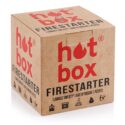
Hot Box ® Firestarter Blog
How hot is a fire?


How Hot is a Fire? Understanding Temperatures in Wood Burners, Fireplaces, and BBQs
Fire is hotter than most people think. A typical wood fire can range from 300℃ to over 800℃ — depending on the fuel, appliance, and airflow. Here’s what you need to know.
How hot does a wood fire get?
When burning wood on an open fire, temperatures usually reach around 300℃ to 600℃. In enclosed stoves with controlled airflow, heat can rise significantly — often hitting 700℃ to 800℃ or more. That’s hot enough to heat a home, cook food, or turn logs into glowing embers that radiate warmth for hours.
Fire temperature by type
| Fire Type | Typical Temperature Range |
|---|---|
| Open Fireplace | 300℃ – 600℃ |
| Wood Burning Stove | 500℃ – 800℃+ |
| Charcoal BBQ | 260℃ – 370℃ (direct grilling) |
| Pizza Oven (wood-fired) | 400℃ – 500℃+ |
| Campfire | 400℃ – 600℃ |
What affects fire temperature?
- Fuel type — hardwoods like oak and ash burn hotter than softwoods.
- Airflow — more oxygen = hotter, cleaner combustion.
- Moisture content — wet wood burns cooler and smokier.
- Appliance — stoves, ovens, and BBQs concentrate heat better than open fires.
Safety matters
At temperatures above 600℃, stove glass, flue liners, and chimney components are under extreme stress. That’s why it’s important to burn seasoned wood, control airflow, and never overload your fire. Responsible firelighting helps protect both your appliance and your home.
Lighting safely with Hot Box ® Firestarter
To achieve these temperatures, you need consistent ignition. Hot Box ® Firestarter makes it easy: one cube lights logs directly, without kindling, chemicals, or messy newspaper. It burns hot and steady, helping fires reach cooking or heating temperatures more quickly and cleanly.
How Hot Is a Fire? Understanding the Temperature of Flames and Combustion.
Fire is a force of nature that has captivated human beings for millennia. It provides heat, light, and a means to cook food or forge metal. But exactly how hot is a fire? The answer varies greatly depending on the type of fire, the fuel being burned, and the conditions under which it is burning. In this comprehensive guide, we will explore the science behind fire temperatures, with a particular focus on wood-burning fires and how different setups influence their heat output.
How Hot Is a Fire? | Exploring the Basics
To understand how hot a fire can get, we must first consider what fire is. Fire is the visible effect of the combustion process, a chemical reaction between oxygen and a fuel source. This reaction produces heat, light, and various gases. But how hot is a fire during this reaction? The answer depends on numerous factors such as the type of fuel, the availability of oxygen, and the fire’s containment.
Auto-Ignition and Flash Points | The Spark That Starts It All
The auto-ignition point of a material is the temperature at which it spontaneously ignites without an external flame or spark. For wood, this occurs between 300℃ and 482℃. This range varies due to the type of wood and its moisture content. This threshold is often referred to as the flash point, although technically, the flash point is slightly lower and refers to the temperature at which vapors ignite in the presence of a spark.
When wood reaches this temperature range, it begins to carbonize, a process where the cellulose breaks down and forms charcoal. This transformation occurs at a rate of approximately 0.8mm per minute. Thus, achieving this level of heat quickly is crucial for efficient ignition and combustion.
Watch it in action: if you prefer a visual explanation of flame heat and how combustion behaves in real-world conditions, this short demo helps frame what “hot” actually looks like in practice.
Tip: notice how quickly temperature climbs when fuel is dry and airflow is correct — that’s the difference between a “smoulder” and a proper burn.
Fire Using Wood Logs | How Hot Can They Get?
If you’ve ever built a fire using wood logs, you’ve probably wondered: how hot is a fire fueled by logs? The answer depends largely on how the fire is built and what kind of appliance is used.
Open Fire vs. Wood Stove | Heat Comparison
When burning wood on an open fire, the temperature typically peaks at around 600℃. However, some large, well-ventilated bonfires can reach upwards of 1000℃ in localized hot spots. In contrast, burning the same wood in a well-designed wood-burning stove or closed appliance significantly increases the temperature. Some high-efficiency stoves can reach up to 800℃ or more.
This difference occurs because a closed stove traps heat and controls airflow better than an open fire. As a result, the fire burns hotter and more cleanly, reducing emissions and improving fuel efficiency.
Getting Your Fire Started | Generate Heat Quickly
How hot is a fire in its initial stages? That largely depends on how effectively you start it. The beginning stages of a fire are crucial. Without enough initial heat, the fire will smolder rather than burn, leading to incomplete combustion and high emissions.
To generate heat quickly, you must create an ideal base for your fire. Using a combination of firelighters and dry kindling, you can reach the necessary temperatures for ignition swiftly. The faster you reach the auto-ignition point, the cleaner and more efficient your fire will be.
How Hot Is a Fire? | Effective Fire Starting Techniques
Creating a fire that gets hot fast isn’t just about lighting a match. It involves preparation and method. Below are some essential elements required to start a hot and efficient fire:
Essential Fire Components:
- Ignition Element: Firelighters or a similar starter.
- Kindling: Small pieces of dry timber that ignite quickly.
- Larger Kindling or Small Logs: With a moisture content of 20% or less.
Once these components are gathered, construct your fire in a format that allows for proper airflow. This ensures that oxygen reaches all parts of the fire, promoting faster and hotter combustion.
After assembling your fire, use your ignition source. If done correctly, you’ll notice that the fire reaches high temperatures quickly, preparing it for larger logs and sustained burning.
Alternatives to Traditional Fire Starters
Many people find the traditional fire-starting process cumbersome. Gathering kindling, firelighters, and small logs can be time-consuming and inconvenient, especially for those with busy lives.
Enter Hot Box ® Firestarter | Revolutionizing How Hot a Fire Gets
Hot Box ® Firestarter offers a solution by combining all the necessary components for starting a fire into one convenient product. Each box contains the ignition element, kindling, and larger fuel sections required to create an ideal fire setup. Simply place the box in your stove or fireplace and light it.
See the “no-faff” start: this quick clip shows the simple placement-and-light approach that removes the usual kindling and firelighter juggling.
If you want a consistent, repeatable start (especially when you’re tired, it’s cold, or the logs aren’t perfect), this is the “set it and forget it” method.
This streamlined process removes the hassle and ensures a quick, hot start every time. With less time spent preparing your fire, you’ll enjoy higher temperatures and cleaner combustion sooner.
Ready for a clean, fast start? Get Hot Box ® Firestarter here — one box contains the ignition element, kindling and larger fuel sections you’d normally gather separately.
How Hot Is a Fire? | Test Results Using Hot Box ® Firestarter
To evaluate how hot a fire can get using Hot Box ® Firestarter, we conducted tests in both an open fire and a closed appliance, specifically a DG Vision 80 stove.
Open Fire Test
Within approximately five minutes, the open fire reached a temperature of 661.7℃. This is significantly hotter than the average temperature achieved by manually starting an open fire with separate components.
Closed Appliance Test
The same test using the same materials in a closed stove resulted in a temperature of 728.8℃. This increase of 67.1℃ clearly illustrates the advantage of using a closed appliance for higher efficiency and heat output.
These tests confirm that Hot Box ® Firestarter is not only convenient but also highly effective in reaching high temperatures quickly, thereby reducing emissions and maximizing heat.
How Hot Is a Fire? | The Importance of Moisture Content
Another crucial factor influencing how hot a fire gets is the moisture content of the wood. Wet or green wood requires more energy to evaporate the water before it can ignite, significantly reducing the overall temperature of the fire.
Always aim to use wood with a moisture content below 20%. Drier wood ignites faster, burns hotter, and produces less smoke and creosote buildup.
Combustion Efficiency | Why It Matters
Combustion efficiency determines how completely the fuel is burned. A high-efficiency fire produces more heat and fewer emissions. When asking how hot is a fire, you’re also asking how efficiently the fire burns.
To improve efficiency, ensure the following:
- Use dry, seasoned wood.
- Ensure adequate airflow.
- Start with a strong ignition source.
- Use a well-designed stove or fireplace.
By following these steps, you not only achieve a hotter fire but also contribute to a cleaner environment.
How Hot Is a Fire? | Fuel Types Compared
Different fuels burn at different temperatures. Here’s a quick comparison:
- Softwoods (Pine, Spruce): 500℃ to 700℃
- Hardwoods (Oak, Maple): 700℃ to 900℃
- Charcoal: Up to 1,200℃
- Natural Gas: Around 1,960℃
- Propane: Approximately 1,980℃
As you can see, wood fires are hot, but other fuels can burn even hotter. However, for domestic heating and ambiance, wood remains a favorite due to its sustainability and aesthetics.
Safety Considerations | Managing High Temperatures
Understanding how hot a fire gets is essential for safety. High temperatures can cause burns, ignite nearby combustibles, or damage fireplaces and stoves.
Always:
- Maintain a safe distance from the flames.
- Keep flammable materials away.
- Use fireguards and heat-resistant gloves.
- Install smoke and carbon monoxide detectors.
Proper precautions ensure you can enjoy the benefits of a hot fire without unnecessary risks.
Environmental Impact | Cleaner Burning Fires
Hot fires are cleaner fires. When wood burns at a high temperature, it combusts more completely, reducing the release of harmful pollutants. This not only improves air quality but also protects your chimney from creosote buildup, which can lead to chimney fires.
Using products like Hot Box ® Firestarter enhances the environmental benefits by enabling fast and efficient combustion from the start.
Conclusion | So, How Hot Is a Fire?
The question how hot is a fire has many answers depending on the context. On average:
- Open fires: up to 600℃
- Wood stoves: around 800℃
- Bonfires: over 1000℃ in some areas
- With Hot Box ® Firestarter: up to 728.8℃ in just minutes
The temperature of a fire depends on several variables: fuel type, moisture content, airflow, and the appliance used. Efficient fire starting methods and quality materials like those found in Hot Box ® Firestarter contribute significantly to reaching optimal temperatures quickly.
So, next time someone asks how hot is a fire, you’ll have more than just a simple answer. You’ll have an in-depth understanding rooted in science, practice, and tested results.
#flammablesimplicity³
Hot Box ® Firestarter | From Yorkshire with ♥️